 by
by If you’ve ever wondered why the market sometimes rises like crazy and other times drops without warning, you’re not alone. Every investor — beginner or expert — deals with the same question: Why does the market move the way it does?
The answer lies in something called market cycles.
Market cycles explain the repeated patterns of growth, decline, recovery, and expansion that financial markets naturally go through. Once you understand these cycles, you’ll make smarter decisions, avoid panic, and invest with confidence.
Let’s break everything down in the simplest, most beginner-friendly way.
1. What Exactly Is a Market Cycle?
A market cycle is a repeating pattern the market experiences over time.
Think of it like the seasons:
- Spring → Recovery
- Summer → Growth
- Fall → Slowdown
- Winter → Decline
The economy and financial markets move through similar phases.
These cycles happen because of changes in consumer spending, business profits, interest rates, inflation, and global events.
When you understand these cycles, you stop reacting emotionally and start making smart, informed choices.
2. Phase One: Expansion — The Market Feels Alive
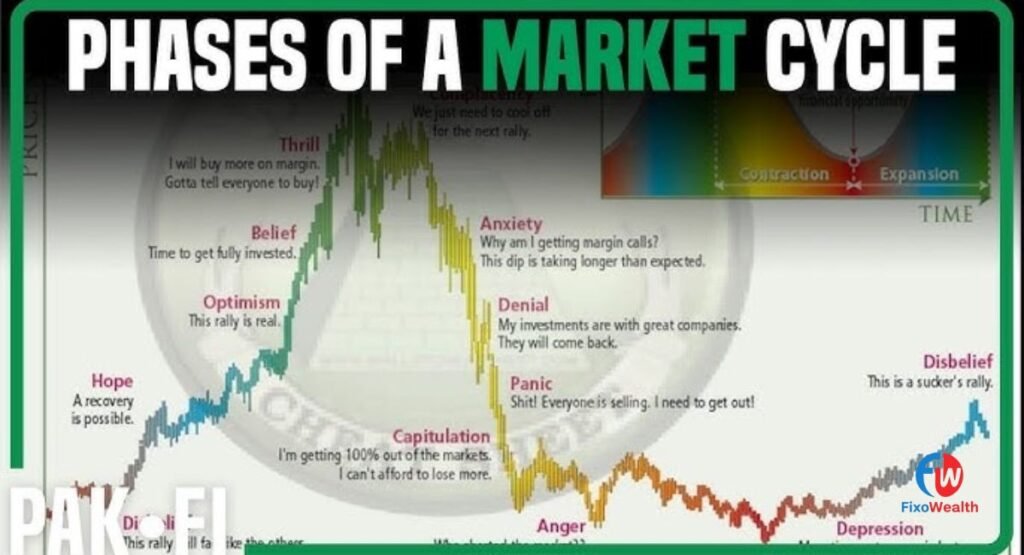
The expansion phase is like the “summer” of the economy.
Everything feels good:
- Jobs are increasing
- Businesses are earning more
- Investors are confident
- Stock prices are rising
- People are spending more
This is usually the longest and most enjoyable period of the cycle.
Beginners love investing during this phase because everything seems easy — but that’s exactly why caution is important.
If you invest blindly during peak excitement, you might pay too high a price.
3. Phase Two: Peak — When Everything Looks Too Perfect
The peak is the top of the cycle — the moment when the market has grown too much, too fast.
It’s the period when:
- Prices become overpriced
- Investors start getting overly confident
- Everyone assumes the market will never fall
- New investors jump in out of fear of missing out
But behind the scenes, cracks start appearing.
The peak doesn’t last long, and once the excitement fades, the market begins to shift into the next phase.
4. Phase Three: Contraction — The Slowdown Begins
This phase is like “autumn.”
The market still looks fine from a distance, but if you look closely, things are cooling down.
Signs include:
- Companies lowering earnings forecasts
- Investors becoming cautious
- Spending slowing down
- Interest rates affecting borrowing
- Some stock prices falling little by little
Many beginners ignore this phase, but smart investors start preparing — not panicking — preparing.
5. Phase Four: Recession — The Winter of the Market
This is the toughest phase emotionally.
A recession doesn’t always mean a crisis, but it does mean the economy is shrinking.
Common signs:
- High unemployment
- Low consumer spending
- Declining profits
- Falling stock prices
- Fear and uncertainty everywhere
Most beginners panic and sell during this stage — which often locks in their losses.
But here’s the truth: recessions create the best long-term buying opportunities.
This is when smart investors quietly build wealth.
6. Why Market Cycles Repeat Again and Again
Many people ask, “Why can’t the market just stay good all the time?”
The answer is simple: human behavior.
Market cycles repeat because:
- People get excited
- Prices go too high
- Confidence turns into fear
- Fear brings prices down
- Eventually confidence returns
It’s a natural pattern driven by emotions, supply and demand, and economic conditions.
Understanding this rhythm helps you avoid emotional investing.
7. How To Use Market Cycles To Your Advantage
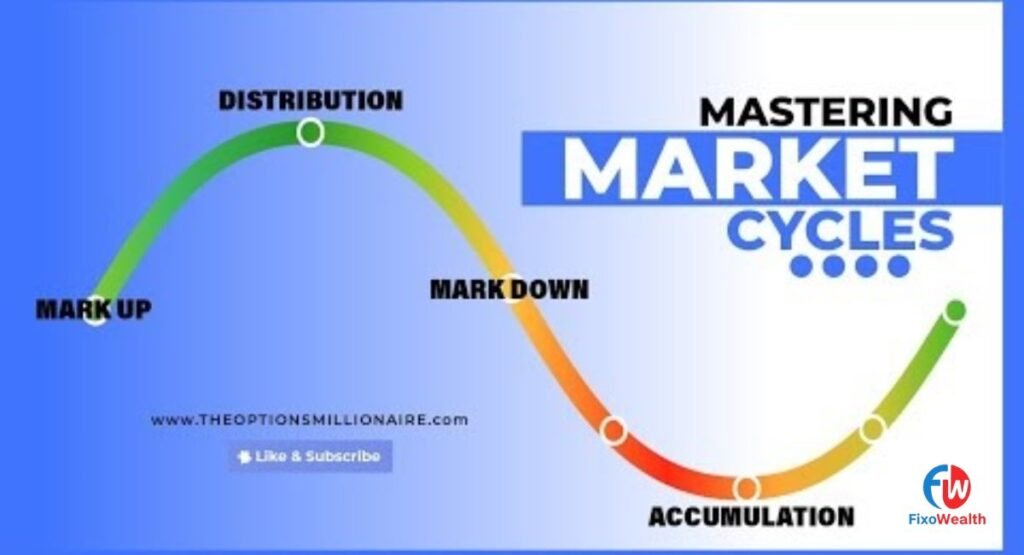
You can’t control the market cycle — but you can control how you react to it.
Smart investors do things like:
- Invest consistently in every cycle
- Avoid chasing hype at the market peak
- Use down markets to buy quality assets at discount prices
- Stay patient when markets fall
- Trust long-term growth instead of short-term news
Once you stop trying to predict the cycle and instead work with it, your results improve dramatically.
8. The Key Rule: Never Let Emotions Guide Your Decisions
Market cycles test emotions:
Excitement during the rise, fear during the fall.
But here’s the rule that every successful investor lives by:
Logic grows wealth — panic destroys it.
If you:
- Keep investing regularly
- Stay calm during downturns
- Avoid rushing into overpriced markets
- Focus on long-term goals
…then the market cycle works for you, not against you.
Final Thoughts
Market cycles may sound complicated at first, but once you break them down, they’re easy to understand.
They’re simply the natural rise, fall, and recovery of the economy.
When you learn to recognize these phases, you stop reacting emotionally and start investing with clarity, confidence, and long-term purpose.